

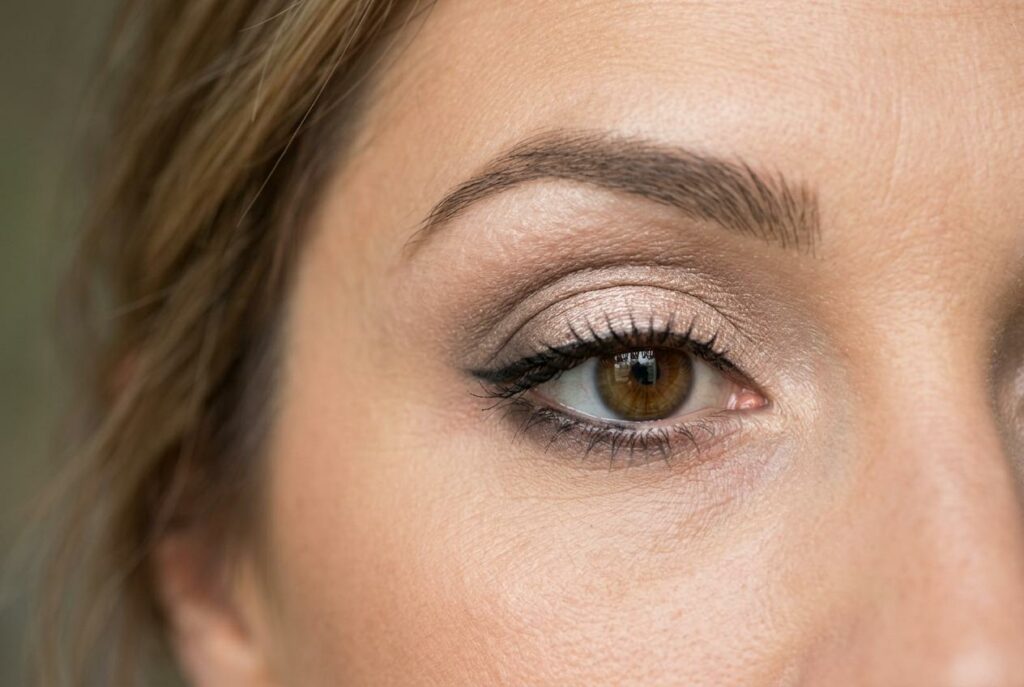
You wake up with gritty, uncomfortable eyes after a night out wearing your favourite makeup look. Your eyes feel dry and irritated, leading you to wonder whether your cosmetic routine might be the culprit.
Yes, makeup can make dry eye worse by blocking oil glands, introducing irritating chemicals, and creating particles that disrupt your natural tear film. However, you can still enjoy wearing makeup by choosing the right products and using proper application and removal techniques.
Our team at Trail Vision Care Clinic helps patients understand how daily habits, such as makeup use, can affect their eye health and comfort. For those experiencing ongoing discomfort, dry eye therapy can help restore moisture and reduce irritation.
How Makeup Products Affect Your Eyes
Your eyelids are lined with tiny oil glands called meibomian glands that produce oils to keep your tears from evaporating too quickly. When makeup clogs these glands, your tears can’t do their job properly.
Many cosmetics contain preservatives, fragrances, and dyes that can irritate your delicate eye tissues. These chemicals can cause inflammation and reduce your natural tear production. Powder-based products create microscopic particles that can get into your eyes and stick to your tear film, making your eyes feel scratchy and dry.
Which Makeup Products Cause the Most Problems
Eye Makeup That Worsens Dryness
Waterproof mascara creates the biggest challenge for dry eye. While it stays put during workouts or emotional movies, removing it requires aggressive rubbing with harsh makeup removers that can damage your delicate eyelid skin.
Eyeliner applied to your inner rim (the waterline) directly contacts your tear film and can block oil glands. This placement also increases the chance of bacteria from your pencil entering your eye. Old or contaminated eye products harbour bacteria and irritants that can worsen dry eye symptoms and potentially cause infections.
Base Makeup and Foundation
Powder foundations, setting powders, and eyeshadows release tiny particles into the air when you apply them. These particles can settle on your eyes and mix with your tears, creating an uncomfortable, gritty sensation.
Heavy foundation or concealer applied too close to your lash line can migrate into your eyes throughout the day. Setting sprays often contain alcohol and other drying agents that can evaporate moisture from your eye area, leaving your skin and eyes feeling tight and uncomfortable.
Safe Makeup Choices for Dry Eye
Eye-Friendly Product Features
Look for products labelled “hypoallergenic” and “fragrance-free” to reduce your risk of irritation. These formulas skip common allergens and harsh chemicals that can trigger dry eye symptoms.
Water-based mascaras and eyeliners tend to be gentler than oil-based formulas, which can break down your tear film. Products tested by ophthalmologists have undergone safety evaluations specifically for use around your eyes, making them safer choices for sensitive eyes.
Application Tips That Help
Keep your eyeliner on the outer edge of your lash line instead of the waterline. This prevents direct contact with your tear film while still defining your eyes beautifully.
Cream eyeshadows create fewer airborne particles than powders and tend to stay put better throughout the day. Replace your eye makeup every 3 to 6 months to prevent bacterial buildup that can worsen dry eye symptoms.
Proper Makeup Removal
Choose gentle, oil-free makeup removers designed for sensitive eyes. These products break down makeup without leaving residue that can clog your oil glands overnight.
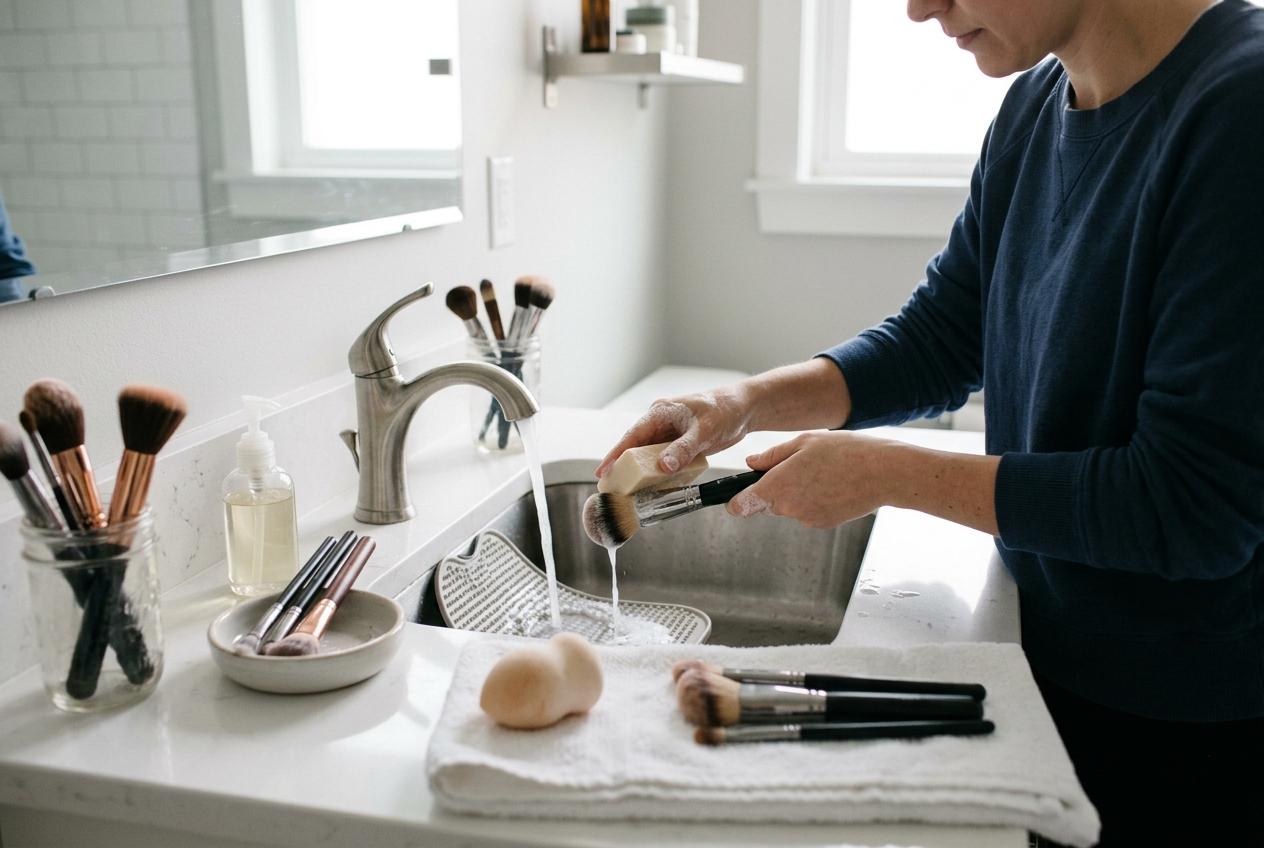
Pat and press your makeup remover against your closed eyes for a few seconds before gently wiping away. This softens the makeup so you don’t need to rub harshly. Clean your makeup brushes and applicators weekly with gentle soap to prevent bacteria buildup that can irritate your eyes. Using warm compresses after makeup removal can help open blocked oil glands and provide additional comfort.
When to Visit Your Eye Doctor
You should see an eye doctor if you experience persistent burning, stinging, or gritty sensations that don’t improve when you remove your makeup. These symptoms might indicate an underlying dry eye condition that needs professional treatment.
If your dry eye symptoms continue to worsen despite switching to gentler products and improving your makeup routine, a professional evaluation can help identify other contributing factors.
Trail Vision Care Clinic offers comprehensive dry eye evaluations using modern technology to determine the best treatment approach for your specific needs. Our experienced team can help you enjoy wearing makeup again while keeping your eyes comfortable and healthy. Schedule an appointment to discover personalized solutions for your dry eye concerns.