

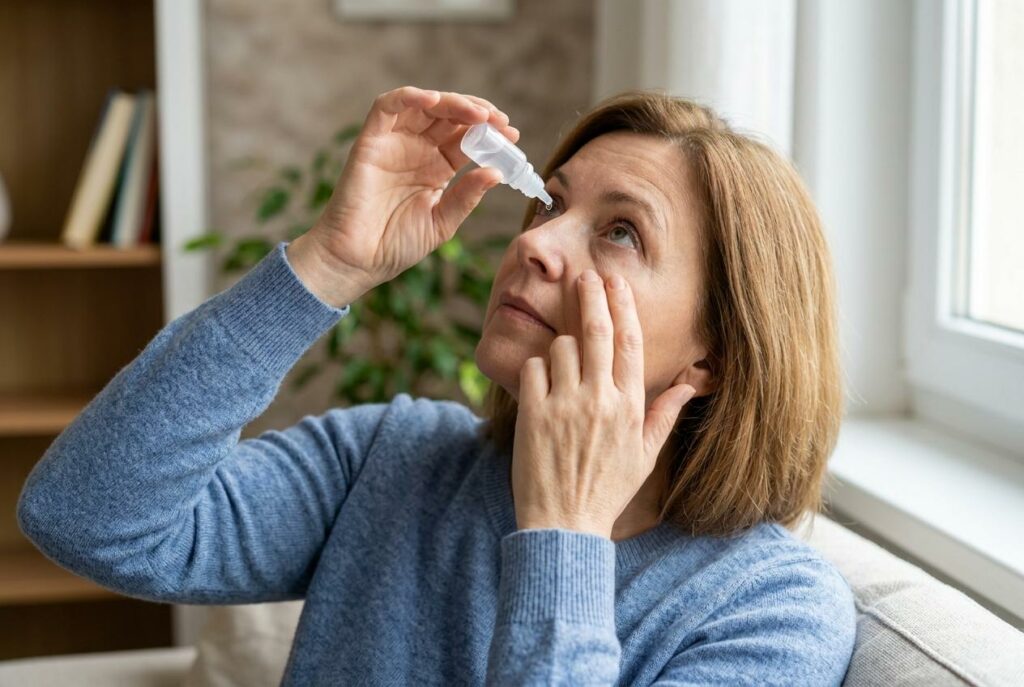
Your eyes feel scratchy by afternoon, and you find yourself blinking constantly to clear your blurry vision. You’ve noticed that staring at your computer screen makes the burning sensation worse, and by evening, your eyes feel tired and irritated.
The right eye drops can provide relief from dry eye symptoms, but choosing the correct type depends on your situation and its underlying causes. Understanding what’s behind your discomfort helps you select drops that actually work for your situation.
At Trail Vision Care Clinic, many of our patients who struggle to manage dry eye benefit from dry eye therapy.
What Creates Your Dry Eye Symptoms
Your tear production naturally decreases as you get older, which explains why dry eyes become more common after age 30. Your tears contain three layers—oil, water, and mucus—and problems with any of these layers can leave your eyes feeling uncomfortable.
Screen time significantly reduces how often you blink. When you focus on your phone, tablet, or computer, your blink rate drops substantially. This means your tears don’t spread evenly across your eye surface, creating dry spots.
Environmental factors also play a major role in tear quality. Air conditioning, heating systems, wind, and low humidity can make your tears evaporate faster than your eyes can replace them. Dry eye conditions often develop from multiple contributing factors working together.
Common Signs You Have Dry Eyes
You might experience several telltale symptoms that point to dry eye issues:
- A gritty or sandy feeling, as if something is stuck in your eye
- Burning & stinging sensations that worsen throughout the day
- Blurred vision that improves with blinking or rubbing your eyes
Paradoxically, if you have dry eye, your eyes might also water excessively. This happens because your eyes try to compensate for dryness by producing more tears. However, these reflex tears don’t have the right balance of oils to properly lubricate your eyes.
Types of Eye Drops That Help
Artificial tears form the foundation of most dry eye treatments. These drop provide the moisture your eyes aren’t producing naturally and may offer immediate comfort when you use them regularly.
Prescription drops often work differently, such as by addressing inflammation or stimulating your natural tear production. Your eye doctor might recommend these options if over-the-counter drops don’t provide enough relief.
Preservative-free eye drops benefit people with sensitive eyes or those who need to use them frequently. The preservatives in regular drops can irritate your eyes when used more than 4 times per day. People who wear contact lenses for dry eye may need specially formulated drops that work with their lenses.
Over-the-Counter vs Prescription Options
Lubricating drops provide temporary relief by adding moisture to the surface of your eye. You can buy these at any pharmacy, and they work well for mild, occasional dryness.
Medicated drops have more specific functions, like reducing the inflammation that contributes to dry eye symptoms. These prescription treatments target the underlying problem rather than just masking symptoms.
Long-term treatment with certain prescription drops can actually improve your natural tear production over time, giving you more lasting relief than artificial tears alone.
How to Choose the Right Eye Drops
Match your eye drops to your symptoms for better results. If you experience burning and stinging, look for drops that contain ingredients to soothe irritation. For gritty sensations, thicker gel-based drops might work better.
Consider how often you need relief throughout the day. If you reach for drops every few hours, preservative-free versions prevent additional irritation.
You should also factor in contact lens compatibility. Some drops aren’t safe to use with contacts, while others are specifically formulated for contact lens wearers. Understanding dry eyes and contacts management can help you choose the right products.
Preservative-Free vs Regular Drops
Preservatives can irritate sensitive eyes, especially if you use drops multiple times daily. These chemicals help prevent bacterial growth in multi-dose bottles, but can make stinging or redness worse in some people.
Single-use vials reduce contamination risk and eliminate preservative exposure. Each vial contains one dose, so you don’t worry about bacteria growing in the solution.
Multi-dose bottles offer convenience and cost savings if you can tolerate preservatives. You can carry one bottle instead of multiple vials, making them practical for daily use.
Dry Eyes vs Eye Allergies
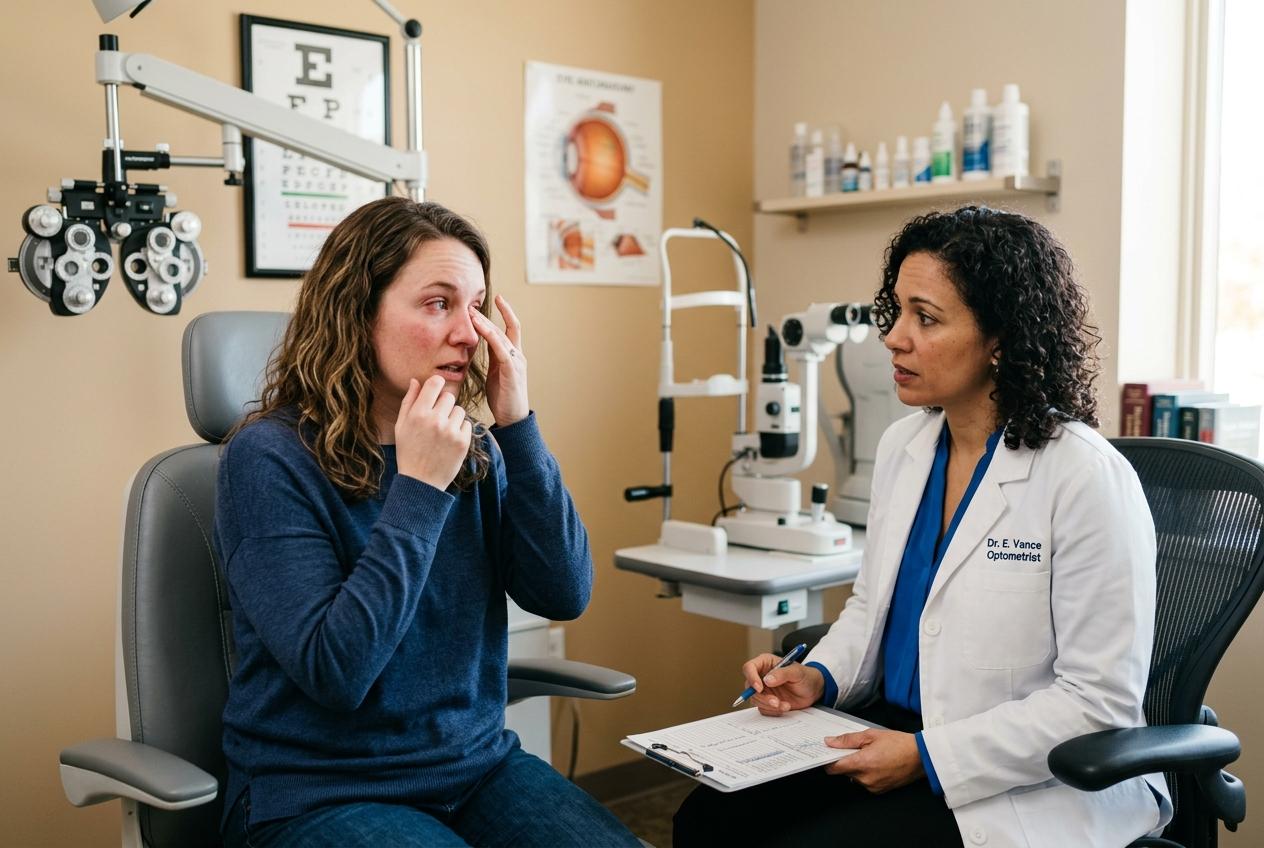
Intense itching usually signals an allergic reaction rather than dry eyes. If you find yourself constantly wanting to rub your eyes, especially during certain seasons, allergies might be the culprit.
Dry eyes may cause a burning sensation and feel like there’s something stuck in your eye. The discomfort tends to be constant rather than the intense itching that comes with allergies.
Different conditions need different treatments, so using allergy drops for dry eyes (or vice versa) won’t give you the relief you’re seeking. If you notice symptoms worsening during certain months, you might be dealing with both eye allergy season challenges and dry eye issues.
When Allergies Make Dry Eyes Worse
Antihistamines can decrease tear production as a side effect, making existing dry eye symptoms more pronounced. This creates a challenging situation where treating one condition worsens another.
Seasonal factors affect eye moisture by creating inflammation that disrupts normal tear function. Spring pollen or fall ragweed can make your dry eyes feel much worse during certain months.
Combined conditions need specialized care from an eye care professional who can address both issues simultaneously with appropriate treatments.
When to See an Eye Doctor Trail BC
Your symptoms might persist despite trying different over-the-counter drops. This suggests you need a professional evaluation to identify underlying factors that simple artificial tears can’t address.
Vision changes that affect your daily activities—like difficulty reading, driving, or working on a computer—indicate that you need more than basic eye drops.
Professional diagnosis prevents complications and helps you receive appropriate treatment. An eye doctor can identify conditions like meibomian gland dysfunction that require in-office therapy. Comprehensive eye exams can reveal the underlying factors behind your symptoms.
In-Office Dry Eye Treatments Available
Modern diagnostic equipment can measure tear production, evaluate tear quality, and assess the health of your oil glands.
In-office procedures can restore tear function through techniques like intense pulsed light therapy (IPL) or meibomian gland expression. These treatments address problems that eye drops alone can’t fix.
Personalized treatment plans provide lasting relief by combining the right drops with other therapies tailored to your specific condition and lifestyle needs.
If you’re struggling with persistent dry eye symptoms in Trail, our team at Trail Vision Care Clinic can help you find effective solutions. Contact us today to schedule an appointment and take the first step toward comfortable, healthy eyes.