

Key Takeaways
- Babies benefit from a first eye exam between 6 and 9 months of age.
- Kids and teens from 6 to 19 do well with a yearly checkup.
- Adults 20 to 39 can go every 2 to 3 years, then every 2 years after 40.
- Adults 65+ benefit from yearly visits to track cataracts and macular changes.
- Glasses, contacts, diabetes, or a family history of eye disease can mean more frequent visits.
- Sudden blur, flashes, floaters, or eye pain call for a same-week appointment.
How Often Is Often Enough
You’ve been meaning to book that appointment. Your vision seems fine, your glasses still work, and life in the Kootenays keeps moving. Then you catch yourself squinting at your laptop at 4 p.m. with a dull ache behind your eyes, and you wonder how long it’s been since an eye doctor at Trail Vision Care Clinic actually looked inside your eyes.
Healthy adults between 20 and 39 typically need a comprehensive eye exam every two to three years, while children, adults over 40, and anyone with glasses, contacts, or a health condition like diabetes benefit from a visit every year. Timing shifts with your age and your eye health history, so here’s how it breaks down.
Eye Exam Frequency by Age in Canada
Canadian optometrists recommend a baby’s first eye exam between 6 and 9 months. It sounds early, but a doctor can check eye alignment and focusing long before a child can read a letter chart. From age 6 through 19, a yearly children’s eye exam keeps up with growing eyes and the reading demands of school.
Once you’re in your twenties and thirties, every two to three years works for many people with no symptoms and no health concerns.
Adults 40 to 64
Around 40, the lens inside your eye becomes less flexible. Restaurant menus drift farther from your face, and small print on a medication bottle turns fuzzy under dim light. Every two years gives the eye doctor a chance to update your prescription and watch pressure inside your eyes.
Adults 65+
Yearly checkups make sense at this stage. Cataracts, macular changes, and glaucoma tend to develop slowly, so year-over-year comparisons show shifts you’d never notice on your own.
Why Your 30s Are a Smart Time to Start
Your thirties stack up fast. Eight hours of screens, a phone at night, a toddler who needs their own first exam, and a weekend on the trails. Your eyes work hard through all of it, and tired, gritty eyes at the end of the day are worth mentioning to a doctor rather than shrugging off. If screen time is the culprit, it may be worth asking about digital eye strain.
There’s also a practical reason to come in now. A baseline record of your prescription, your eye pressure, and images of your retina gives the team something to compare against in ten or twenty years. When a small change shows up later, they can tell whether it’s new or has always been there.
Habits you set now also travel with you. People who book their eye exam alongside their dental cleaning rarely find themselves guessing when they last had an exam.
Reasons You May Need Exams More Often
If you wear glasses or contacts, plan on a yearly visit so your prescription stays current and the doctor can check how the lenses sit on your eyes. Contact lens wearers especially benefit, since lenses affect the surface of the eye over time.
Certain health details also change the schedule.
- Diabetes or high blood pressure, which both affect the small blood vessels in your retina
- A parent or sibling with glaucoma, macular degeneration, or retinal disease
- A past eye injury or eye surgery
- Medications known to affect the eyes, including some taken long term
If you’re living with diabetes, a dedicated diabetic eye exam keeps a closer watch on the blood vessels at the back of your eye.
What Happens During an Eye Exam
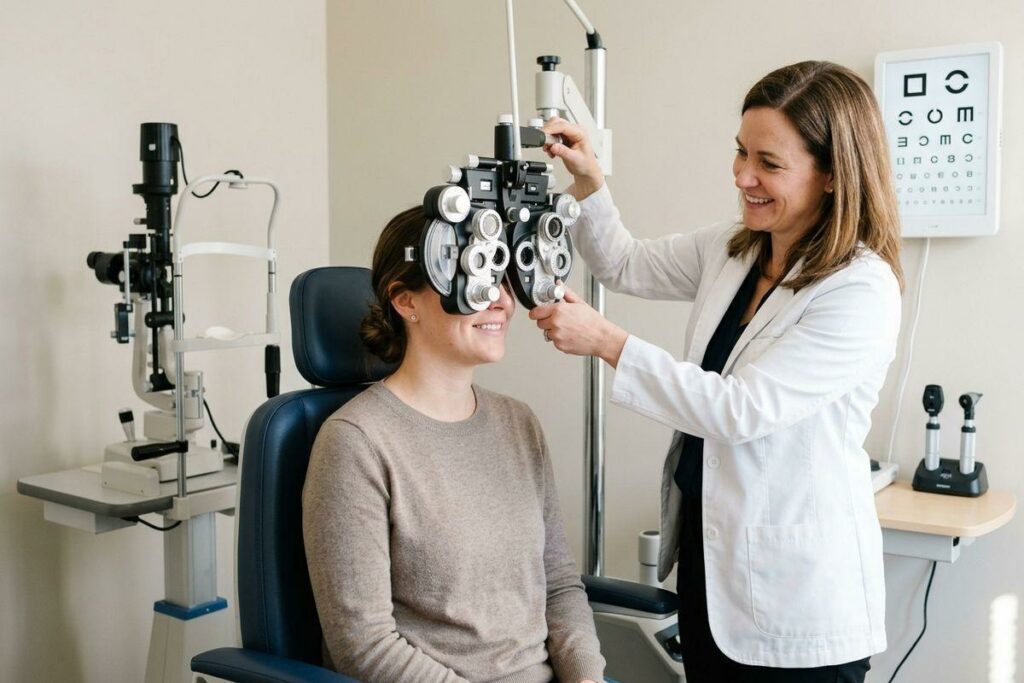
The visit starts with a conversation. Expect questions about headaches, screen hours, medications, and whether anyone in your family has eye disease. Then comes vision testing and a prescription check, including how well your eyes work together and focus up close.
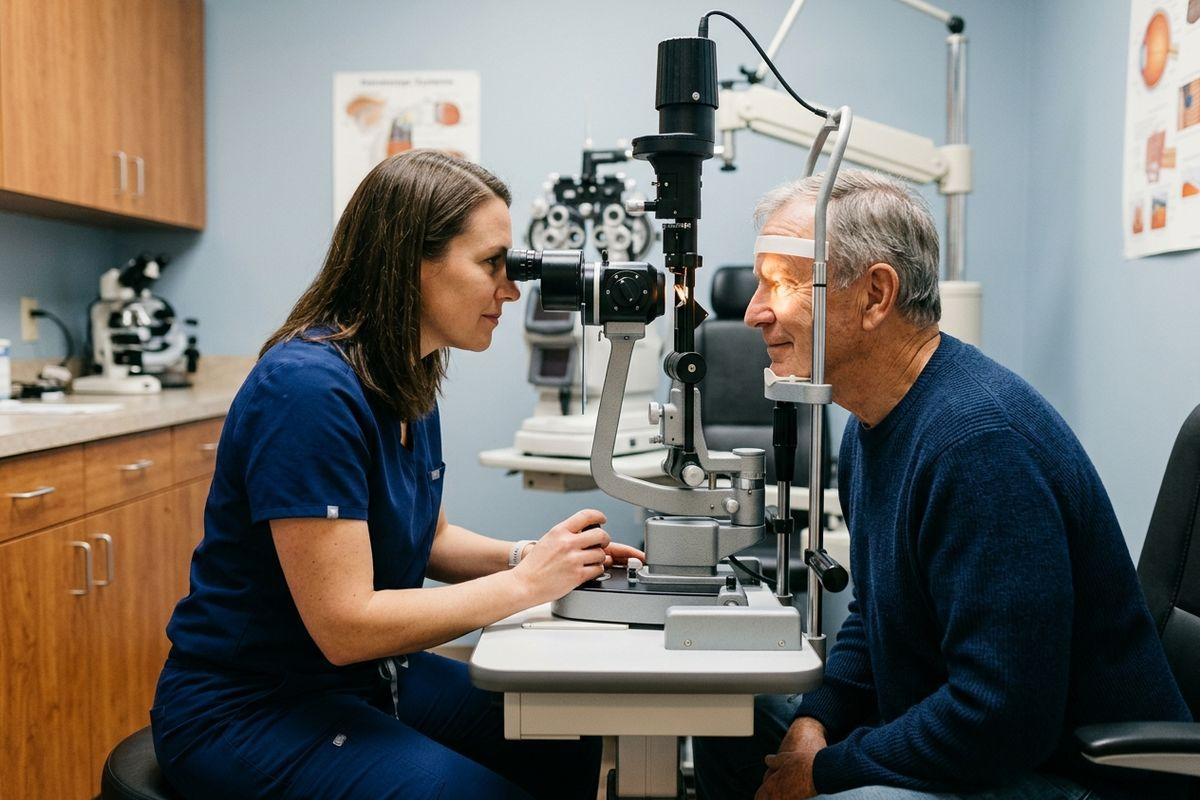
The part people remember is the imaging. Digital photos and scans of the retina and optic nerve give the eye doctor a detailed look at the back of your eye, and those images get saved for comparison at your next visit.
What an Exam Can Reveal
Glaucoma, cataracts, macular degeneration, and dry eye disease often show up before you feel anything unusual. Your eyes can also hint at problems elsewhere, since signs of diabetes, high blood pressure, and high cholesterol sometimes appear in the retina first. Catching these early is one of the quiet advantages of keeping up with regular eye disease diagnosis and management.
Book Your Next Eye Exam in Trail
Whether you’re overdue or just starting to notice small changes, an eye exam is the simplest way to stay ahead of your vision. At Trail Vision Care Clinic, our team provides comprehensive eye exams for every age and stage, right here in Trail’s Shavers Bench neighbourhood, and we’re glad to welcome patients from Rossland, Warfield, Montrose, and Fruitvale. Book your appointment today.