

Dry eye has a way of making ordinary days harder than they need to be. Drops help for a few minutes, then the grittiness comes back and you’re reaching for the dropper again.
Intense pulsed light, better known as IPL, is now offered in many dry eye care plans. IPL treatment can ease dry eye by warming and loosening hardened oil in your eyelid glands, so your tears hold together longer between blinks.
How IPL Treatment Works for Dry Eye
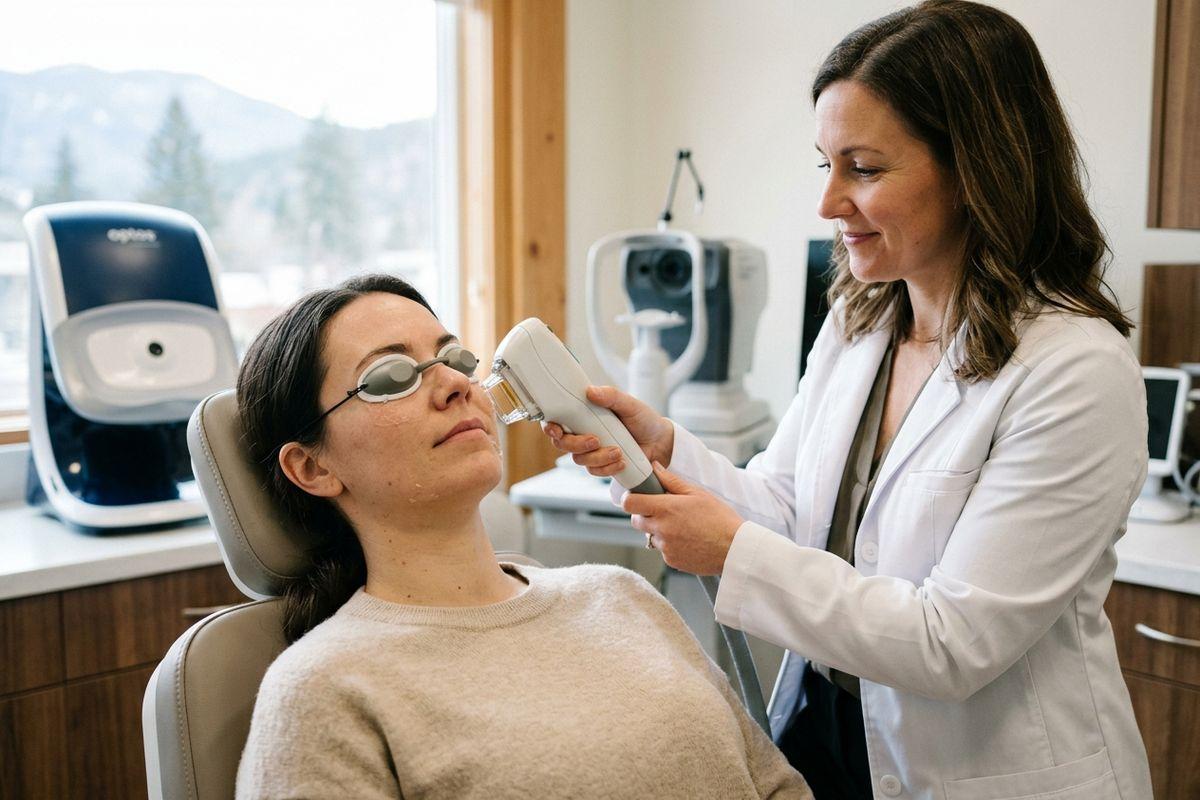
During a session, your optometrist aims short pulses of light at the skin around your eyes, just below the lower lids and out along your cheeks and temples. Your eyes stay covered the whole time and nothing touches the surface of your eye at any point.
Under the skin, that light becomes gentle heat. The heat softens thickened oil sitting inside the glands along your lid margins so it can move again.
IPL can also reduce the redness and low-grade inflammation many people carry along the edge of their lids for years without noticing.
Why Blocked Oil Glands Cause Dry Eye
Healthy tears carry a thin oily layer on top. That layer slows evaporation and keeps your tears in place between blinks.
When the glands clog, the oily layer thins out and your tears evaporate within seconds. Blocked glands sit behind a large share of dry eye complaints, which is why treatment often starts at the lids.
Age, hormones, and long stretches at a screen all add to the strain. So does contact lens wear, especially on windy days or in dry indoor air.
Benefits of IPL Treatment for Dry Eye
People tend to describe the change in small, ordinary ways. Here’s what can improve once the oil starts flowing again:
- Less burning and stinging as the day goes on
- Fewer watery episodes at inconvenient moments
- Longer comfortable wear time in contact lenses
- Calmer lid margins in the morning
Vision that blurs and clears usually points to an unstable tear film. Once that film holds, the flicker often settles down. Some people find they reach for artificial tears a couple of times a day instead of every half hour.
Signs IPL Might Be a Fit for You
Certain patterns point toward blocked glands. Bring these up with your optometrist if any sound familiar:
- Drops help for a few minutes, then the discomfort returns.
- Your eyes feel heavy by mid-afternoon, especially after screen work.
- Your eyelid margins look red or crusty when you wake up.
- You have rosacea or flushing across your cheeks and nose.
- Contact lenses feel fine at 9 a.m. and unwearable by dinner.
What Happens During an IPL Session
Appointments are short and focused on your comfort:
- Protective shields go over your eyes, and cooling gel goes onto the surrounding skin.
- Your optometrist uses the handheld device to move short light pulses along your cheeks and lower lids, one side at a time.
- Your optometrist removes the gel and gently expresses the softened oil from your glands.
- You get a quick look at your lid margins before you head out.
Plan on roughly 10 to 15 minutes. There’s no downtime, so you can drive yourself home or go straight back to your desk.
How Many IPL Sessions You May Need
Most plans open with 4 sessions spaced 2 to 4 weeks apart. That spacing gives your glands time to respond between visits.
Many people notice their eyes feel better around the second or third appointment. After the first series, a touch-up once or twice a year can help hold onto the comfort you’ve built.
What to Know About Comfort and Aftercare
The pulses feel warm, a little like a light snap of an elastic band against your skin. Mild redness can linger for an hour or two.
Skip makeup for the rest of the day. Wear sunscreen and keep your eyes protected from the sun for a few days afterward.
IPL isn’t suited to every skin tone or medical history, so your optometrist reviews this with you before booking anything. And if the warmth bothers you partway through a session, say so. Settings can be adjusted.
Dry Eye Treatment Starts with an Exam
Dry eye comes from more than one source, so a full eye exam comes first. Your optometrist checks your tear film, your gland structure, your lid margins, and how quickly your tears break up after a blink.
From there, the plan gets built around how you spend your days: hours on a screen, contact lens habits, time outdoors, and any medication that dries you out. Follow-up visits track how things are going, so the plan can change when it needs to.
Ready to Find Out If IPL Suits Your Eyes?
If your eyes feel worn out by mid-afternoon, an exam can help you find out whether blocked glands are part of the picture. Our team at Trail Vision Care Clinic can walk you through what IPL involves and whether it fits your history.
Book an appointment and get a clear answer about what your eyes need.